
How Arrest Warrants Work in Duchesne County
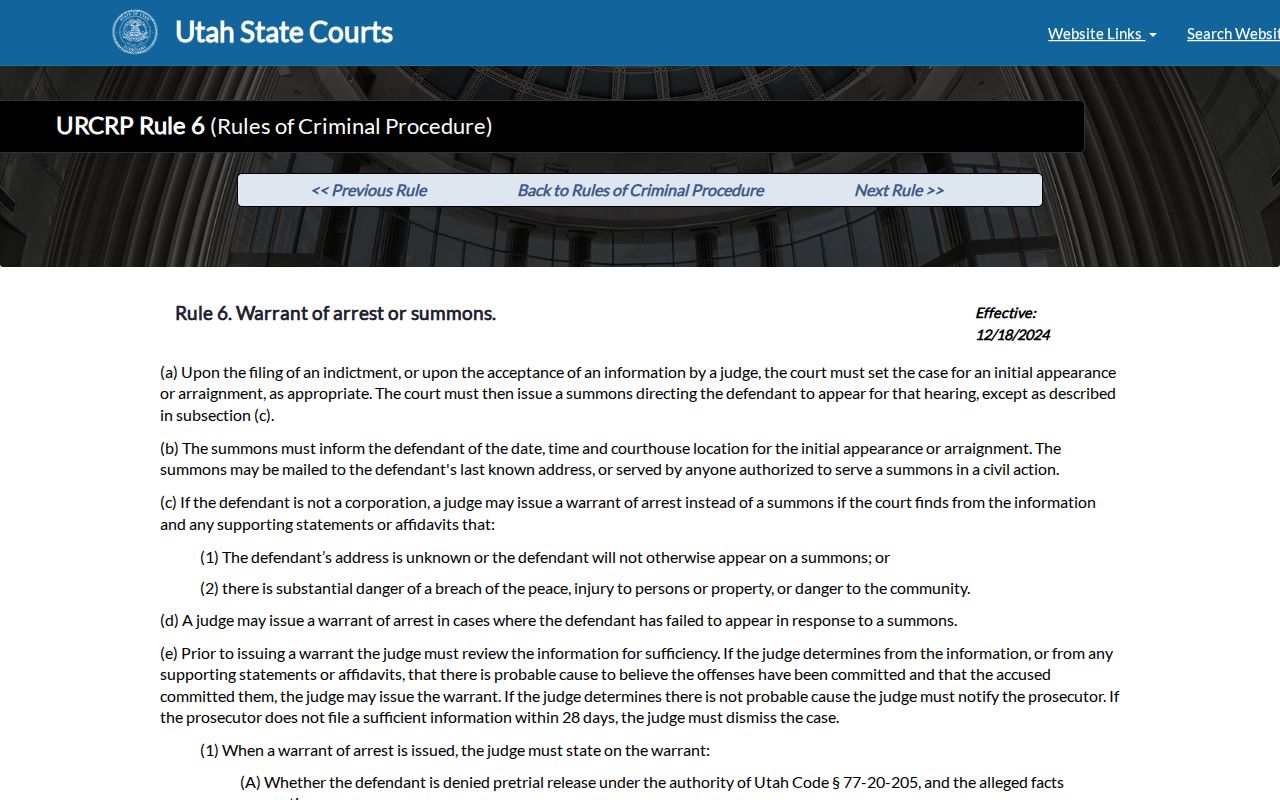
Utah Rule of Criminal Procedure 6 lets a judge sign an arrest warrant after reviewing a charging document plus supporting statements or affidavits for probable cause. A summons can be swapped for a warrant when an address is unknown. The same applies when a person seems unlikely to appear, or safety concerns tip the scale. A judge can also issue one after a missed initial appearance or arraignment. From there the clerk enters the order into the court information system, and Utah officers may execute it anywhere in the state. For a Duchesne County warrant search, the public SWW tool is a sensible first check, and Xchange may show the public case history. Still, the issuing court holds the answer on current status and release terms.
Rule 6 Sets the Local Issuance Path
Which court issues a Duchesne County warrant depends on the charge. Utah District Court, Eighth Judicial District, takes felonies and class A misdemeanors. Most class B and C misdemeanors, infractions, traffic matters, and ordinance violations go to Justice Court. The court reviews probable cause and issues the warrant. The Sheriff serves it, but the legal basis is the court's alone. The official Rule 6 text spells out the summons-versus-warrant choice, entry, service, return, and release conditions, so read the rule itself for the court process.
A real case still depends on its judge, charging record, and release terms.
Arrest Warrants: What They Contain
A warrant under Rule 6 must say whether release is denied and on what conditions. It states whether monetary bail applies and whether the person must appear. When bail is set, the judge weighs ability to pay and picks the lowest amount reasonably calculated to secure appearance. A warrant may also carry a transport guarantee. Duchesne County publishes no single bond schedule covering its courts.
| Authority | Issuing court, judge or magistrate, and service agency |
|---|---|
| Basis | Charging information and probable-cause material, which may be sealed |
| Case fields | Case number, court, charge class, citation or hearing history |
| Release | Monetary bail, other terms, personal appearance, or no-release direction |
| Status | Issue, service, return, recall, cancellation, or modification |
Statewide Warrants May Update After Court Action
Utah Code §53-10-208.1 makes the clerk transmit issuance, recall, cancellation, or modification of covered warrants within one day. Even so, the public portal can lag. The UCJIS manual keeps the full system for court and law-enforcement use, with only a portion public. The issuing court still holds the answer on current legal status. After a recall or change, ask the clerk when the state file should reflect it. Check the public search again, but rely on the court's confirmation.
How Warrants Get Served in Duchesne County
A peace officer may execute a Utah warrant anywhere in the state. The officer does not need the paper in hand at the moment of arrest. On request, the officer must show the warrant as soon as practicable or give the offense and warrant information instead. Duchesne County Sheriff serves warrants countywide and in contract-city areas. Roosevelt has its own Police Department. Altamont's code assigns warrant duties to its chief or marshal and officers. Myton's official police page routes residents to the county Sheriff. These local roles do not add up to a single city warrant list. Ask the serving office about service and custody questions. Recall belongs to the issuing court.
Local Service Does Not Mean a Local Roster
The county Sheriff site posts no separate public arrest-warrant roster and no dedicated warrant division line. The office does list its main number, dispatch contacts, and jail number. Roosevelt Police publishes its police services and a records-request route, but no warrant lookup. For a warrant check, the public route remains SWW, Xchange, and the court named in the case. The county's jail page describes its facility, court security, and inmate transport duties.
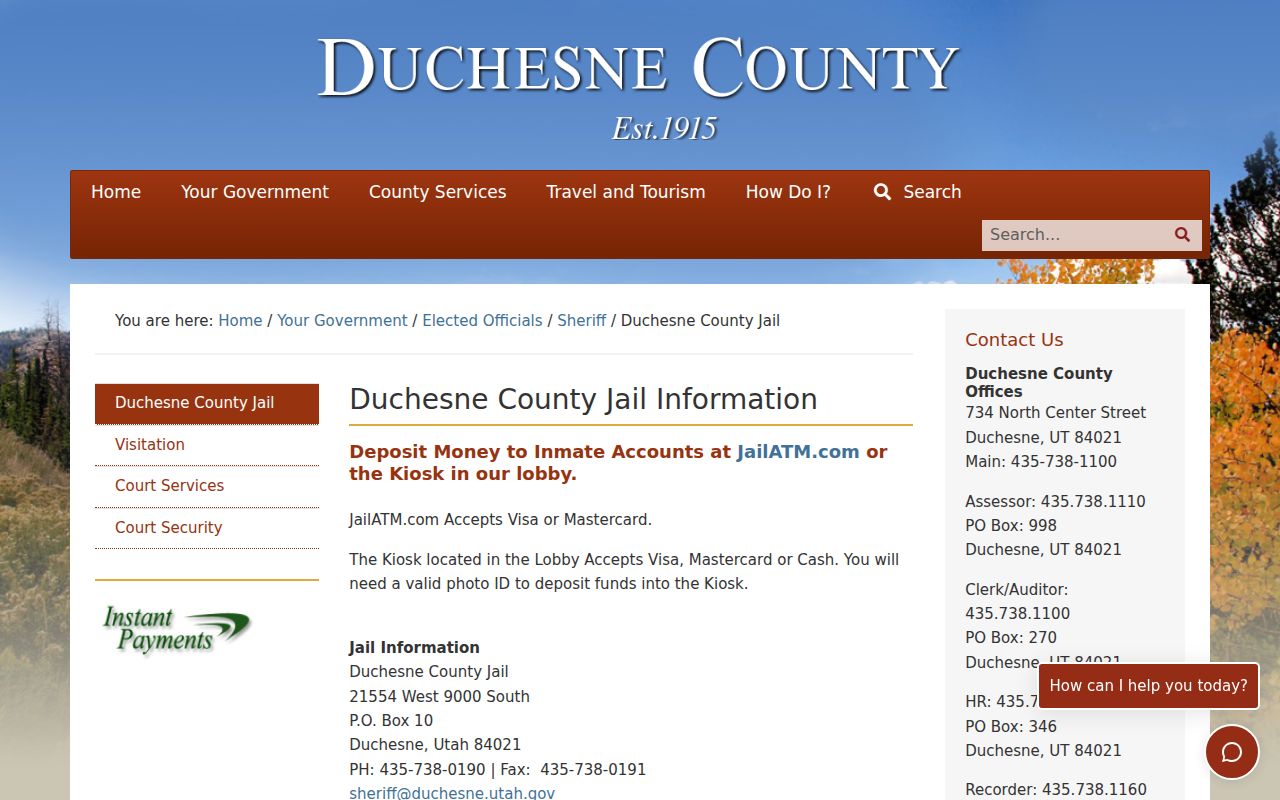
Duchesne County publishes no bond-window hours or warrant surrender form, so call the jail before going there.
Arrest Warrants, Summonses, and Bench Warrants
A summons asks a person to attend court and does not authorize arrest. A Rule 6 arrest warrant grows out of probable cause, a missed initial appearance, or a skipped arraignment. A bench warrant under Rule 9A involves a later setting or another court reason. Check the case's event history in Duchesne County records to see which process applies.
| Order | Why it may issue | Where to confirm |
|---|---|---|
| Summons | Notice to attend an initial setting | Issuing clerk |
| Arrest warrant | Probable cause or Rule 6 appearance issue | District or Justice Court |
| Bench warrant | Later missed setting or court-related reason | Court that scheduled the event |
After an Arrest on a Duchesne Warrant
Rule 9A sets the clock after an arrest on a warrant. Someone who cannot meet the issuing release terms must be presented to a magistrate within 48 hours, with weekend and holiday adjustments. A person still in custody must be seen by the issuing court no later than the third day. If release terms are met, the person gets release instructions and a new appearance obligation. These are court-rule timelines. They are not a promise of release or a prediction for any one case. Ask the jail about custody logistics. Ask the court about the next hearing.
Before Reporting on an Arrest Warrant
Duchesne County posts no walk-through surrender protocol, no warrant intake counter, and no ID list. So pick up the phone. Call the issuing court first and ask whether you can schedule an appearance or file a motion instead. If the court tells you to surrender, confirm where and when with the Sheriff or jail before you go. A lawyer may also ask the court about recall and release terms ahead of time. For the fuller county process, the Duchesne warrant resolution steps show how to coordinate court and Sheriff contacts.
Get instructions first. The county does not say that voluntary surrender prevents booking or custody, and no general walk-in window is published.
Handling an Arrest Warrant in Your Name
Found a warrant in your own name in Duchesne County? Start by tracking down the issuing court. SWW and Xchange can show you the court and the case number. Then call the clerk of court directly. Ask whether the active warrant still stands, what bond or release terms apply, and whether you must appear in person. If the online warrant lookup turns up nothing, the Duchesne County Sheriff takes records requests through NextRequest GRAMA. Plan on up to ten business days for an ordinary request, or up to five for a qualifying expedited one. One more caution: BCI says it never phones people to announce an arrest warrant or collect fines, so hang up on anyone demanding payment for a warrant out of the blue.